Antioxidant Activities and Volatile Flavour Components of Selected Single-Origin and Blend Chocolates
The following is a summary of the stated research mentioned above. The content summarized here, including the figures and tables, all belong to the researchers (unless otherwise indicated). The summary attempts to stay as close to the original paper as much as possible with some adjustments in regards to technical jargon (methodology) and length of the paper.
Introduction
Chocolate is a good source of bioactive polyphenols with possible health benefits such as prebiotic activity (food for probiotics which support gut health) and decreased risk of cardiovascular disease. Cocoa beans have a high phenolic capacity is comparable to other polyphenol-rich products such as tea and red wine. However, comparing health benefits is difficult because not all polyphenols have the same bioactivity in the body.
Most chocolate is made from a mix of cacao beans from different regions in the world. However, there is an emerging market of single-origin chocolate, where beans come from a specific farmer, plantation, or specific region. These are often marketed as luxury products, and brings up questions about the impact of origin on quality and food safety. These single-origin chocolates are characterized by unique flavour profiles dependant on the specific beans used.
There are different methods used to determine the antioxidant activity of various chocolates. This is done by investigating a reaction in which a free radical is formed, and how this reaction is inhibited by the addition of the sample extract (the flavanols from the chocolate sample). There are different types of assays which determine the quantity and quality of various polyphenols found in chocolate. This includes ABTS and DPPH assays. Their use and capabilities will be discussed below. In this study they found that although higher identified levels of polyphenols corrected to high levels of flavanols and antioxidant activity, percentage of chocolate was not always a correlated with higher levels of polyphenols.
Chocolate is not only high in polyphenol content, but also in many minerals such as magnesium, potassium, copper, iron, and more. Their concentration is highly influenced by the percentage of cocoa solids in the chocolate (dark having more than milk chocolate). Since metals can have positive and negative roles depending on concentration, its important to be able to identify them in foods.
Quality of cocoa beans are not only determined by levels of polyphenols and minerals, but also volatile aromas and overall flavour. Raw cocoa beans are often quite unpleasant, tart, and bitter. In order to improve the quality, cocoa beans go through various steps including fermenting, drying, and roasting to achieve ideal flavour profiles. And due to many factors during these and other steps involved, it’s possible to alter the flavour profile.
The aim of this study was to analyze and compare total polyphenols, flavonoids, phenolic acids, antioxidant activity, chemical elements, and aroma composition of both blends of various percentages and three single-origin chocolates.
Results & Discussion
Determination of Total Polyphenols, Flavonoids, and Phenolic Acids
Table 1 here showing us how varied the concentrations of polyphenols can be not only between percentages of dark chocolate blends and the blends versus the single origins. Single origins didn’t show any significant variance is polyphenol content.
Cocoa beans and chocolate are rich in antioxidants, mainly catechins, anthocyanins, and proanthocyanidins. The main catechin found in cocoa is (-)-epicatechin. The concentration of the various antioxidants differs among cocoa beans and chocolates, and therefore this difference will influence the antioxidant value from chocolate to chocolate. Table one displays the total phenolic content (TPC), the total flavonoid content (TFC) and the total phenolic acids (TPAC) of the 6 unique chocolate samples.
In this study, the highest polyphenol content was found in the blend dark chocolate with 90% cocoa solids. In contrast, surprisingly the lowest polyphenol content was found in the blend with 100% cocoa solids. The differences between single-origin were not statistically significant.
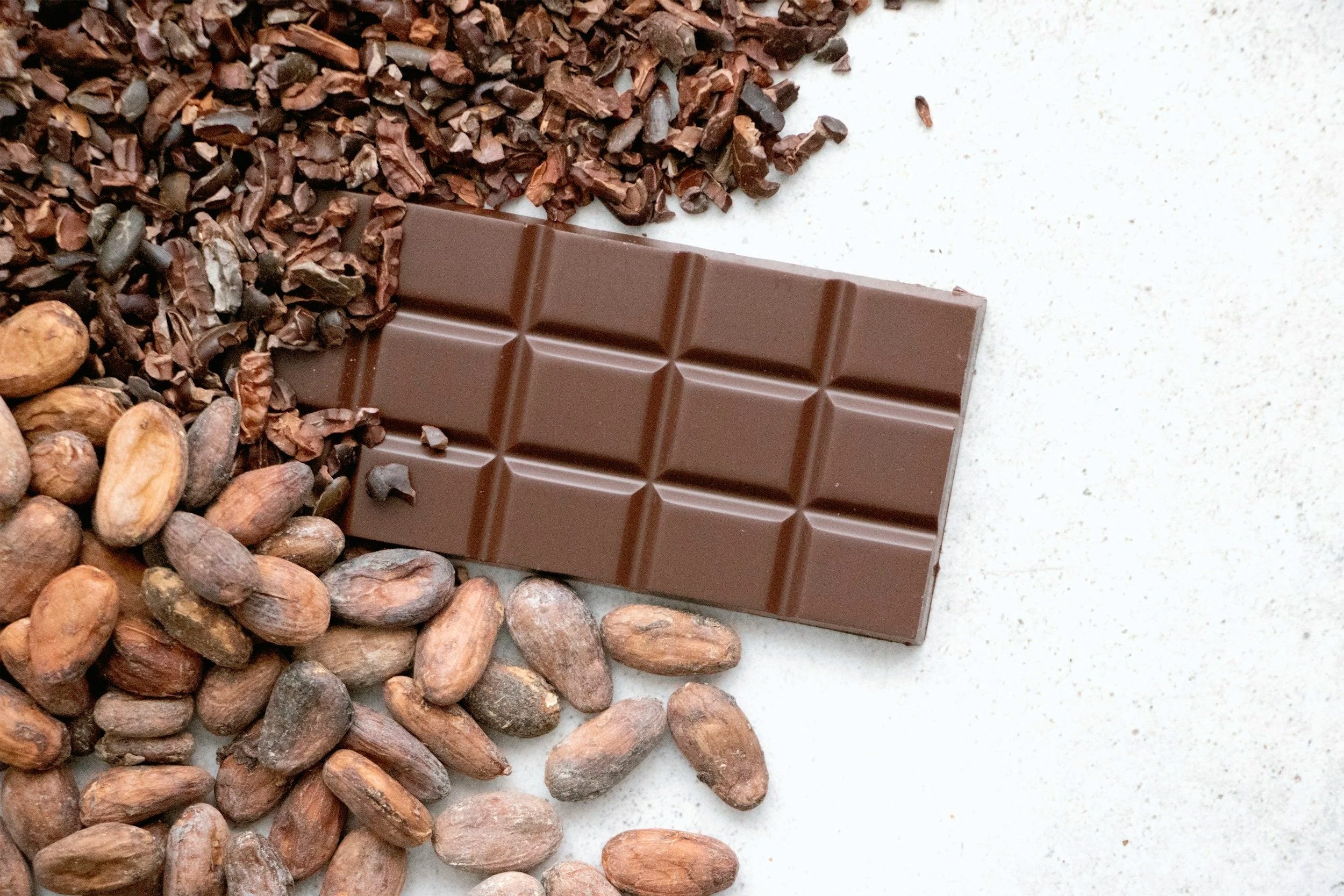
Cocoa beans and dark chocolate generally contain high levels of flavanols (antioxidants) and contain some of the highest concentrations of all our foods. Image by @tetiana_bykovets
Polyphenols are stored in the non-fat component of the cocoa bean (cocoa solids), so generally speaking the higher the percentage, the higher the levels of polyphenols. However, various factors can influence this concentration such as nature of the soil, cultivation and fermentation conditions, climate, and the cultivar itself. The results found here in this study are in accordance with previously reported data (26), but can’t directly be compared due to differences in solvents used to extract and the presentation of the results.
Level of total polyphenol contents were significantly correlated with levels of both flavonoids and phenolic acids (as seen more clearly between the 3 blends). The researchers do mention that to date, it’s not clear why phenolic acids contribute significantly to the total phenolic profile, especially in chocolate (27).
Determination of the Antioxidant Activity of Samples
Table 2 showcases the observed antioxidant activity of the 6 samples using 3 different methods of determining antioxidant activity/capacity.
Showcasing the levels of antioxidants and flavanols is only the first step. We need to also understand the antioxidant activity (the actual ability of these antioxidants to benefit the body). Here, the researchers display the antioxidant activities of the 6 chocolate sample types. They make it clear that there has not been one best method for determining antioxidant capacity of specific foods, so more than one method should be used, and that results from these methods can be biased. Therefore, they used 3 methods to determine antioxidant activity: DPPH, ABTS, FRAP as shown in Table 2.
The difference between the values of the DPPH method and ABTS method is that the ABTS reacts with both hydrophilic and lipophilic antioxidants along with phenolic acids. DPPH only reacts with lipophilic antioxidants, and doesn’t react with phenolic acids either. This is a big part of why the values differ so much between these two methods. Both ABTS and FRAP methods were comparable in regards to which samples contained the highest levels vs the lowest antioxidant activity.
ABTS shows that the highest antioxidant activity was found in the blend90, and lowest in blend100, which positively correlates with total polyphenol and phenolic acid content. The values found for single-origin were higher than the blend100, but comparable to the blend80 and blend90.
Determination of the Mineral Composition
Dark chocolate contains an array of minerals, many of which are greatly beneficial and necessary to our bodies. Generally, higher percentages of dark chocolate (more cocoa solids) contain higher levels of these minerals. However, levels are also impacted by various other factors of bean origin and growth.
A total of 18 elements were determined in the 6 chocolate samples (see Table 3). Elements can be divided into macro (Ca, K, Mg, Na, P, and S) and trace elements. The trace elements were divided into 3 groups: Essential (Cr, Cu, Fe, Mo, and Zn), Probobly essential (Mn, Ni), and potentially toxic which may have essential functions at low levels (Al, Cd, Pb, and Sr).
The highest levels of all macronutrients except sodium was found in the blend100 sample, which makes sense as it contains the highest level of cocoa solids, where these minerals are found. Potassium was the most present macronutrient among all samples. Potassium helps maintain normal cell functions and prevents an increase in blood pressure in response to excessive sodium, reduces markers of bone turnover and recurrence of kidney stones, is essential for maintaining cell osmolarity (how cells regulate water balance), maintains cell membrane potentials for cells to function and communicate, plays roles in various biochemical pathways related to blood glucose levels and proper function of the circulatory system.
Dark chocolate is also a good source of magnesium (32). Magnesium is essential in catalyzing biological reactions, synthesis of proteins, conduction of nerve impulses, muscle relaxation, and energy production.
Of the essential trace elements, Iron was the highest in the blend90, blend100, and Madagascar single-origin. The highest amount of iron was found in the blend90, and this similar amount was found in a 90% sample in a study by Cinquanta et al. (32), which shows that high percentage dark chocolate an excellent source of iron. The differences in iron as well as zinc, phosphorus, and other trace elements may reflect the mineral composition of the soil where the cocoa trees were growing, indicating differences based on cocoa origin (33). Zinc was not detected in all samples, and highest in the blend100 and comparable to other studies (12). Zinc is positively influences our immune system, and lack of can zinc can cause atrophy of lymphoid organs (32). Copper is present in chocolate in trace amounts. Copper is involved in synthesis of collagen and neurotransmitters. Copper deficiencies in early development have been shown to cause cardiovascular disorders and vascular disease later in life.
Levels of potentially toxic elements ranged from 0.0002 to 0.0006 mg/g for lead (Pb), and 0.0002 to 0.0003 for cadmium. Cadmium can be tolerated at extremely low concentrations, so the levels for Cd permitted in chocolate and other foods are set quite low by many countries. The limit in the EU was set to 0.8 mg/kg in chocolates wit 50% or more of cocoa solids. None of the samples here exceeded this limit. Acceptable daily intake of Aluminium (Al) is 1 mg/kg body weight, which would not be easily reached by consumption of dark chocolate on a daily basis. The levels of aluminium was found in the same samples that contained low levels of cadmium (blend90 and Madagascar).
Volatile Profile and Composition
Various volatile aroma compounds identified in these chocolate samples, which contribute to the unique flavour profile of each chocolate sample.
Although levels of nutrients in our chocolate is important, so is the overall experience which includes the aroma/flavour profile. To date, there are over 600 aromatic compounds identified from cocoa beans and chocolate. Table 4 displays many of the compounds and aromas identified in the chocolate samples in this study.
The predominant compound in all samples was acetic acid. Much of the acidic acid in cocoa beans comes from the fermentation process, which is necessary to allow enzymatic reactions and improve the quality of the cocoa beans. However, volatile acids are not desirable in cocoa beans or subsequent chocolate, especially at high levels, and may result in poor flavour. Higher levels of acids could be a result of drying post-fermented beans too quickly trapping the acids inside the bean. However, levels that are too low may be related to loss of a proper chocolate taste (36).
Pyrazines are considered the most important group of odorants in chocolate (38). The presence of pyrazines in dried fermented beans is an indicator of a good fermentation and bean quality predictor. Here, tetramethylpyrazine (cocoa, nutty, roasted, tea-like) was present in the highest concentration of all pyrazines, particularly found in the Madagascar origin.
Various volatile aroma compounds identified in these chocolate samples, which contribute to the unique flavour profile of each chocolate sample.
The aldehydes 3-methylbutanal and 2-methylbutanal are also considered important to quality chocolate flavour, and were found to be highest in the Madagascar origin. The most present alcohols were 2,3-butanediol, and is a desirable aroma identified in chocolate. High levels of alcohols are often characterised with floral notes. Esters are also very important, and contribute to many fruity and floral notes, but can be found in both pre- and post-fermented beans. The most prominent ester identified was phenyl acetate, which has a floral and rose-like aroma.
Conclusion
The results of this study indicate that the biological capacity of antioxidants found in cocoa and chocoalte is highly dependent on characteristics of the raw materials used such as their origin, which was not defined for the blends used in this study.
The results here also indicated that 100% chocolate is not always the most abundant source of polyphenols and other bioactive substances compared to those with lower cocoa content (as shown here with the blend80 and blend90).
The single-origin chocolates sampled here did not show significant differences in antioxidant content between the various origins. All were generally high in bioactive components. However, they did differ quite a bit in regards to aroma compounds compared to those of the blends.
The macro- and micronutrients levels identified in the samples here can certainly contribute to a healthy and nutritious diet.