Working With Chocolate 101
Types of chocolate
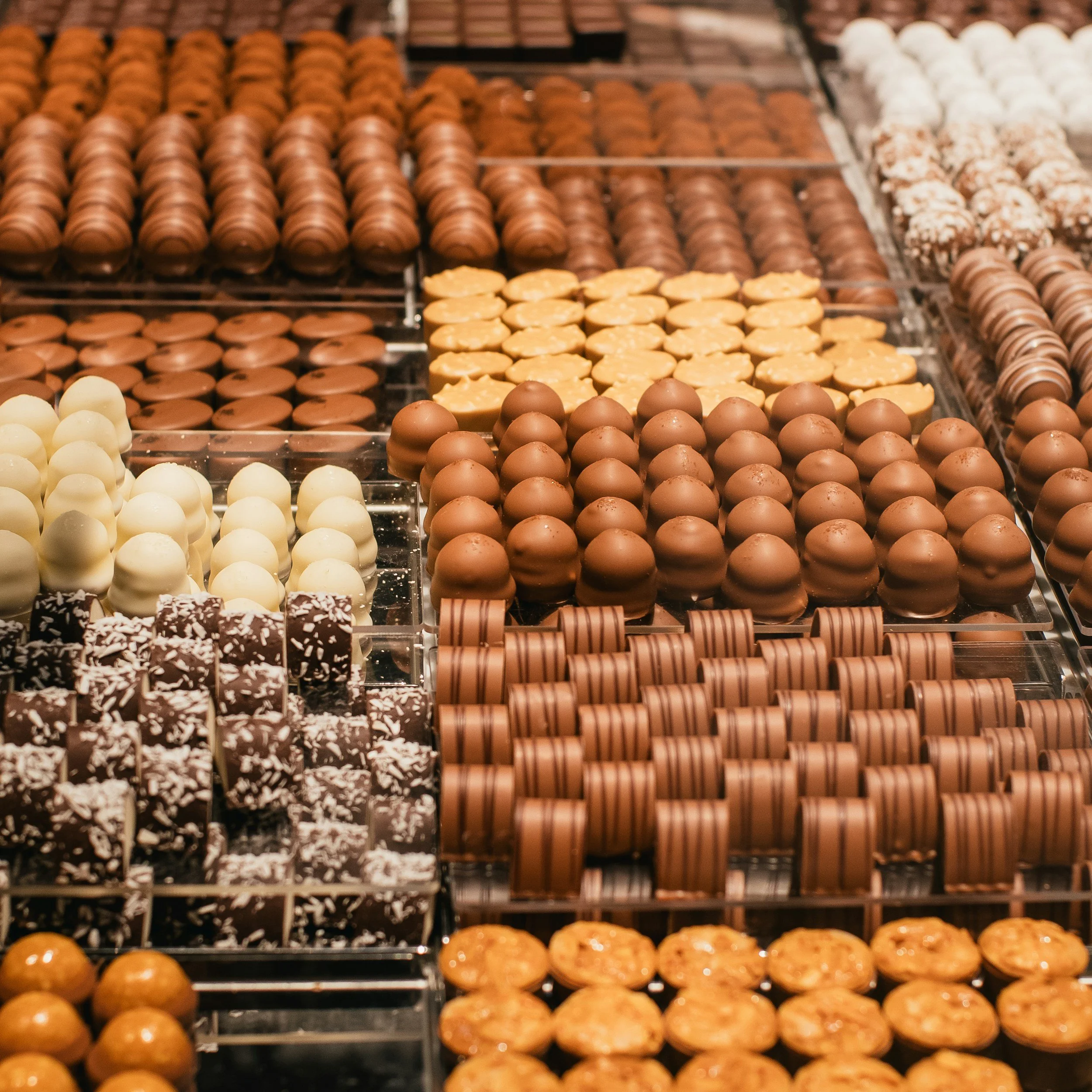
Types of chocolate doesn’t just end at dark, milk, and white. Image by @takeshi2
What do you mean types of chocolate? There’s dark chocolate, milk chocolate, and white chocolate. Yes, that’s a good way to look at the various types of chocolate out there. But if you’ve worked in the chocolate industry, you’ll know that it begins to get more complicated (or less), than that.
I will say, that there is no one criteria for how to classify chocolate, but below will offer you ideas of how you can classify or even just think about the various kinds of chocolate that exist today.
Keep in mind we are not talking about types of chocolate confections, or products made out of chocolate. We are talking about the chocolate itself, made by grinding cocoa beans and sugar in a wet-grinder to produce a smooth consistant product that is solid at room temperature, and silky and molten when heated up.
Types Of Chocolate







thinking beyond dark, milk, and white
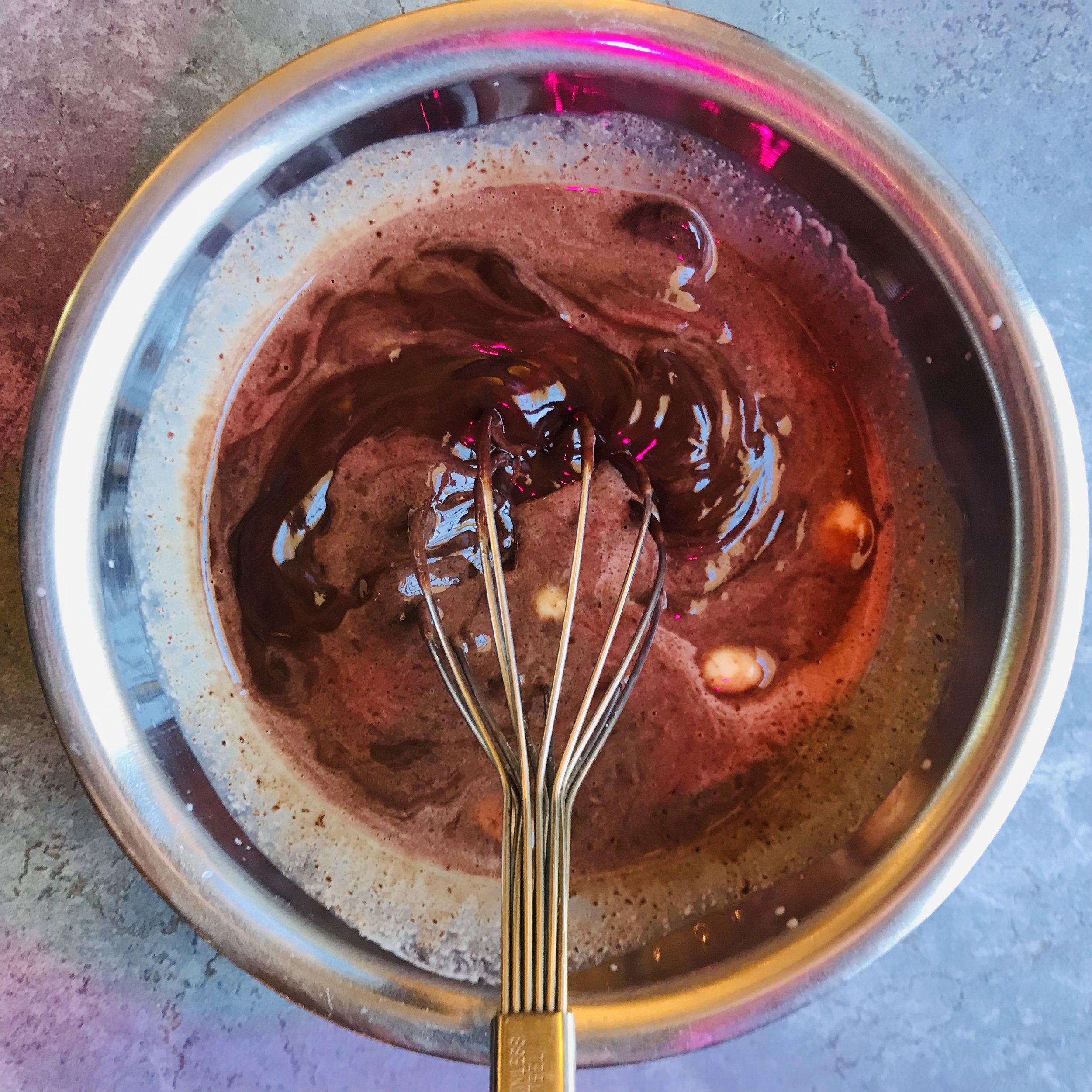
To understand the types of chocolate, let’s quickly discuss how solid chocolate is made. This illustration offers a nice overview of the process. Dark chocolate is made by grinding up cocoa beans in a wet-grinder with some sugar. Milk chocolate is produced the same way, but with milk powder added to the mixture. Both dark and milk chocolate have often have cocoa butter added. Cocoa butter is simply fat pressed from cocoa beans. Cocoa beans naturally have cocoa butter, but adding more into the chocolate mixture ensures the chocolate has better flow/lower viscosity.
Figure 1. A chocolate phylogeny to describe the types of chocolate which exist. Created and designed by Geoseph at The Science Of Chocolate 2016 and then updated in 2018.
White chocolate is made not by grinding the cocoa beans, but utilising only the fat from the cocoa bean. A traditional white chocolate is a mixture of cocoa butter, sugar, and milk powder, usually flavoured with real or artificial vanilla.
Types of chocolate within a historical context
Figure 1 displays a phylogeny which organizes the chocolate reflecting both historical turning points in chocolate, and the suggested types that came from them.
Drinking Chocolate
Drinking chocolate is essentially the “original” chocolate. Chocolate was a drink for thousands of years before the mid 19th C when it became known as a solid chocolate for eating. This focuses on types of solid chocolate, so we will not delve into drinking chocolate much here. To learn more about the history of chocolate, check out this book or the content here.
The creation of cocoa powder
The shift from drinking to solid chocolate began when Van Houten in the Netherlands invented cocoa powder in 1828. You can see this at the top of Figure 1. He did this by designing a hydraulic press which squeezed a great deal of the fat out of the cocoa beans. What was left over was pulverized into a powder that we call cocoa powder. There is a bit more to it, but we will leave it there for the purpose here. The left over “waste product” was the fat that we call cocoa butter. Cocoa butter didn’t have much of a use at the time as it does today, but eventually it would lead to the production of white chocolate or, “cocoa butter based chocolate” as seen on the right of the chart.
The creation of solid eating chocolate
Fry and Sons in Bristol England are given the credit for invented the first real eating chocolate in 1847. They did this by mixing cocoa powder back with the cocoa butter, adding sugar, and let it set into a solid. It was an experiment that was made possible because of what Van Houten created about 20 years prior. Eventually they realized they could just grind the nibs of the cocoa beans with sugar, add extra cocoa butter, and make solid chocolate this way (just as how we make chocolate today). Fry & Sons invented the first dark chocolate which was made by grinding the nibs with sugar. We can call this Whole Nib Chocolate or AKA Dark Chocolate as shown in Figure 1 on the left hand side.
The creation of flavoured eating chocolate
In the late 1800’s, Henri Nestle (A chemist) and Daniel Peter (a chocolate maker) in Switzerland joined forces to make the worlds first solid milk chocolate bar. They added milk powder (which was invented in the early 1800s) to the dark chocolate (whole nib chocolate) and created a new “type” of chocolate we refer to as milk chocolate. It is believed the Swiss (possibly Nestle) were also the ones who eventually added milk powder to cocoa butter (along with sugar) to create what we refer to as white chocolate back in the early 20th Century.
So if we consider adding milk to chocolate as a new type of chocolate: milk chocolate, then we’re going to have to be honest and go back before milk chocolate was invented. This takes us to Northern Italy in the early 1800’s when there was an embargo thanks to Napoleon, and Italians were unable to get much cocoa beans. At the time they were using it to make a European styled drinking chocolate (since solid chocolate had not been invented yet). Since hazelnuts were plentiful, they “cut” the chocolate with hazelnuts in order to extend the product since cocoa beans were both expensive and in low supply. What was created was gianduja, which later more famously became little “boat shaped” eating morsels. If you don’t know what gianduja is, you may have heard of it’s spreadable cousin invented in the 20th Century by Ferrero: Nutella.
So by the early 20th century, we have drinking chocolate (in various forms and styles), dark chocolate, gianduja, milk chocolate, and then white chocolate.
Figure 2. Types of chocolate including whole nib chocolate, flavoured whole nib chocolate, white chocolate, and even ruby chocolate. Created by Geoseph at The Science Of Chocolate.
With the consideration of gianduja as a solid eating chocolate, the trichotomy of chocolate is already broken down. Gianduja is very much a very loved type of chocolate. It can be considered a type of whole bean flavoured chocolate along side milk chocolate. So if that is the case, where does matcha chocolate fit in, or fruit based “white” chocolate.
beyond the trichotomy of dark, milk, and white
Figure 2 illustrates visually the constituents of whole nib chocolate (A and B aka dark chocolate), flavoured chocolate (C aka milk chocolate, gianduja, and others), and cocoa butter based chocolate (D aka white chocolate) and flavoured cocoa butter based chocolate (E aka ruby, matcha, fruit, nut “white” chocolate).
Whole nib chocolate (aka dark chocolate)
Dark chocolate is a lot like black coffee or espresso in the coffee world. The purpose of it is to taste the flavour of the bean (particularly in fine dark chocolate). The sugar in dark chocolate acts similar to the water in black coffee and espresso. It’s a way to temper the flavour, reduce intensity, and allow for the undertone flavours of the product to shine through.
Whole nib chocolate is either 100% cocoa bean, or a percentage of cocoa bean and sugar. Whole nib chocolate is dark chocolate. The flavour comes from the bean itself, and not from any other ingredients added. Although cocoa butter can be added in a small amount (such as 5%), it has marginal to no impact on flavour and is simply added more for pouring and shaping and decreases the viscosity of the molton chocolate.
Flavoured whole nib chocolate (aka milk chocolate, gianduja, and others)
Whole nib chocolate can be flavoured. You add milk, and you get what we refer to ask milk chocolate. Or you add nuts and you get what we refer to as gianduja. You add both milk and nuts, and you get a milk chocolate gianduja. This category is more of a catch all for chocolate that doesn’t fit the narrow definition of dark/whole nib chocolate.
Types of nut flavoured whole nib chocolate
Nowadays, instead of hazelnuts, one can add almonds or cashews to create an almond or cashew gianduja. Sometimes these chocolates are referred to ask “almond milk chocolate” where the almonds act as a replacement for dairy milk powder. Similar in how dairy milk can be replaced with almond milk when making lattes. Whether a maker calls it an “almond gianduja” or “almond milk chocolate” is up to them, the percentage of ingredients, and outcome of the product. There really is no defining parameters at this time.
Types of milk flavoured whole nib chocolate
Today, milk chocolate can not only be made with cow milk powder, but also sheep milk, goat milk, and even camel milk. So under the umbrella of flavoured whole nib chocolate can be a category for milk, from which itself can be divided depending on the type of milk used.
Other types of flavoured whole nib chocolate
There are also chocolate bars flavoured with other ingredients such as oolong tea, real bergamot black tea, green tea, matcha. These can be added to the nibs and sugar with or without milk powder. One can have a dark chocolate oolong tea bar, or a milk chocolate green tea bar. These bars are flavoured with an ingredient that transforms it into it’s own type of bar, just like milk powder or nuts.
Then there are dried fruits added, not as inclusions (sprinkled in or on the chocolate) but ground up in the melanger as an ingredient.
These other flavoured bars can be simple such as C in Figure 2, or complex where the flavoured component can be made of multiple ingredients (such as tea, milk, and other ingredients).
Again, this is more of a catch all, but organized in a way that makes sense if following the logic of milk chocolate and gianduja. One may argue that tea leaves are a small percentage of the overall chocolate that it doesn’t qualify as a type. I can accept that, but I feel it can go either way.
cocoa butter based chocolate
Today, white chocolate can also be flavoured with matcha, dried fruits, nuts, and can even be void of milk powder (just cocoa butter, sugar, and a flavouring ingredient be it tea or fruit or nuts). Not only does the chocolate not look white, but it doesn’t even contain any of the more traditional ingredients. So can we still call it white chocolate? We can, but we can also be more accurate and call it a cocoa-butter based chocolate.
So what is ruby chocolate? Ruby chocolate is considered by some as a “new” type of chocolate which is pink, tart, and fruity in flavour. Is it a 4th type of chocolate? Yes and no. Ruby chocolate is a contentious product, especially in the craft/bean-to-bar world (although they are touchy about everything sometimes). Ruby chocolate was developed in 2017 by people working at Barry Callebaut. First, you need some facts about cocoa beans. Cocoa beans are naturally brown, right? Wrong. Cocoa beans naturally contain high levels of purple or pinkish pigments in the raw unfermented and especially unroasted forms. Raw cocoa beans are naturally various shades including purple and pink tones. It’s the curing process they go through that turns them brown. Cocoa beans are also naturally acidic (including the fruit around them). The fermentation process of curing the cocoa beans also adds lots of acetic and lactic acid to them. So, already you can see that it’s not hard to explain where the tart and pink nature of this ruby chocolate comes from. Although the details are a trade secret, researchers at Callebaut essentially manipulated cocoa beans to have higher than normal levels of the preferred pinkish pigments, and treated in a way to maximize tartness and potential fruity aromas (which can be found naturally in many kinds of cocoa beans around the world). Figure 2 sample E shows the general makeup of Ruby chocolate. The first 3 ingredients are sugar, cocoa butter, and milk powder. Yes, the same 3 ingredients that make white chocolate. We don’t know the exact percentage, but then some of this pink/purple tart cocoa bean is added to this mixture, and voila, you have ruby chocolate. Which brings us to the point - is it a new type of chocolate? It’s technically flavoured white (cocoa butter based) chocolate, but flavoured with itself! So yes, it could be a new type of chocolate. Some may argue this is essentially milk chocolate (cocoa bean, sugar, milk powder, cocoa butter). However, milk chocolate requires a certain amount of cocoa solids to be considered milk chocolate. It’s not likely that ruby chocolate contains enough of the pink cocoa nib to qualify as milk chocolate. As well, milk chocolate is something that has been around for nearly 150 years with a very expected flavour profile. Ruby chocolate does not taste at all like what we expect milk chocolate to taste like. So is it simply another type of milk/flavoured whole nib chocolate? It appears to be more of a type of flavoured cocoa butter based chocolate. Essentially, white chocolate with a little bit of nib added. Again, adding some cocoa nib or solids to a white chocolate doesn’t automatically qualify it to be considered a milk or any other type of chocolate.